Posted on

The Mother of Chaos (And Reinvention)
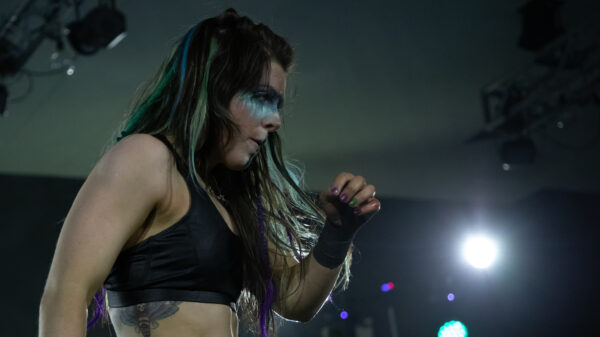
The Mother of Chaos (And Reinvention)

Kasey Owens at Pro Wrestling: EVE, 2021. (PHOTO BY DALE BRODIE CREATIVE/EVE)

UNLESS YOU FOLLOW the U.K. and Irish wrestling scenes, chances are that the name Kasey Owens may not be on the tip of your tongue. But that all soon may be about to change. A contemporary of current WWE stars like Doudrop and Kay Lee Ray, Owens has worked her way up from the tiny Northern Irish wrestling scene to now find herself being showcased on the WWE Network through her regular appearances with Insane Championship Wrestling. Along the way, Owens has cast off labels and preconceived notions about who and what she could be—whether it was “The Girl” or “One Of The Twins”—and has consistently been able to reinvent herself, usually to great success.

“I had always been a fan of wrestling growing up,” said Owens. “I just didn’t really know how to get into the business. But, the more you want something, the more you will find a way to get that thing. And, when I heard about a school that was opening in Northern Ireland, I dove in, and, from there, it was a case of a lot of long car trips throughout Ireland, going to shows, just trying to learn and get better.”
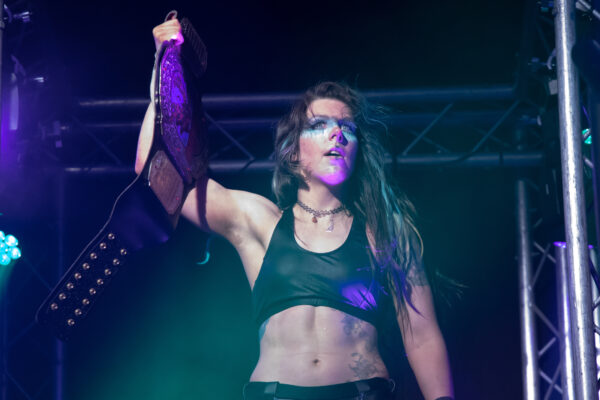
Owens holds up the EVE International championship belt in the waning months of her two-year reign as champion. (PHOTO BY DALE BRODIE CREATIVE/EVE)

Owens hoped to step up her do by entering TNA’s British Boot Camp reality show in 2014, where, alongside her twin sister Leah, she had the chance to impress some of the most respected names in North American wrestling.

“It was mind-blowing,” she reflects. “Gail Kim was sitting right there, and she is one of my top five favorite female wrestlers of all time. So, there was a lot of fan-girling [on my part]. But, even though we got eliminated, it was such a great experience.”

After a stint in Japan, Owens moved to Glasgow, Scotland, and it was there that she really started working on her game (and herself), becoming a regular fixture of ICW. Being part of the promotion’s extraordinary growth is something that she is very proud to have experienced

“I started off helping with the ring crew, so I got an up-close look at the company going from smaller venues to bigger and bigger ones … and even just being a part of that was such a learning experience. I would say it was there, from 2016 onwards, that was really the growth of me as a wrestler with my storylines with Viper (Doudrop) and Kay Lee Ray. And I really focused on how I could stay relevant and keep growing as this company is growing. Then, last year, when I got the call to say we were going to be on the WWE Network, I was so excited. And it’s really changed how I approach wrestling, even in terms of being aware of cameras and ring positioning.”

Away from the WWE Network, Owens has become one of the main players in Pro Wrestling: EVE, where she is coming off a near two-year run as the promotion’s International champion—a title that she only lost due to an injury. When asked about what makes the all-women’s promotion so special, she pointed to it being not simply the quality wrestling but, rather, the entire ethos behind the endeavor.
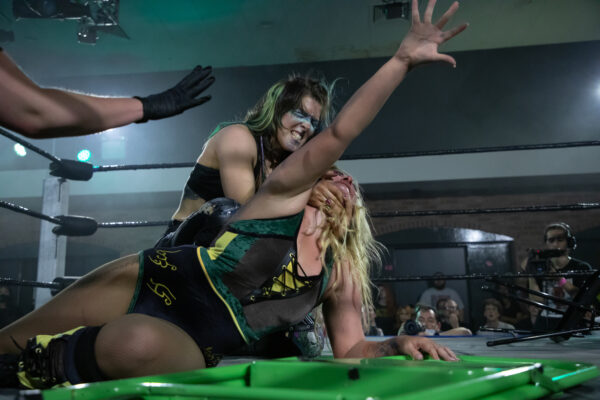
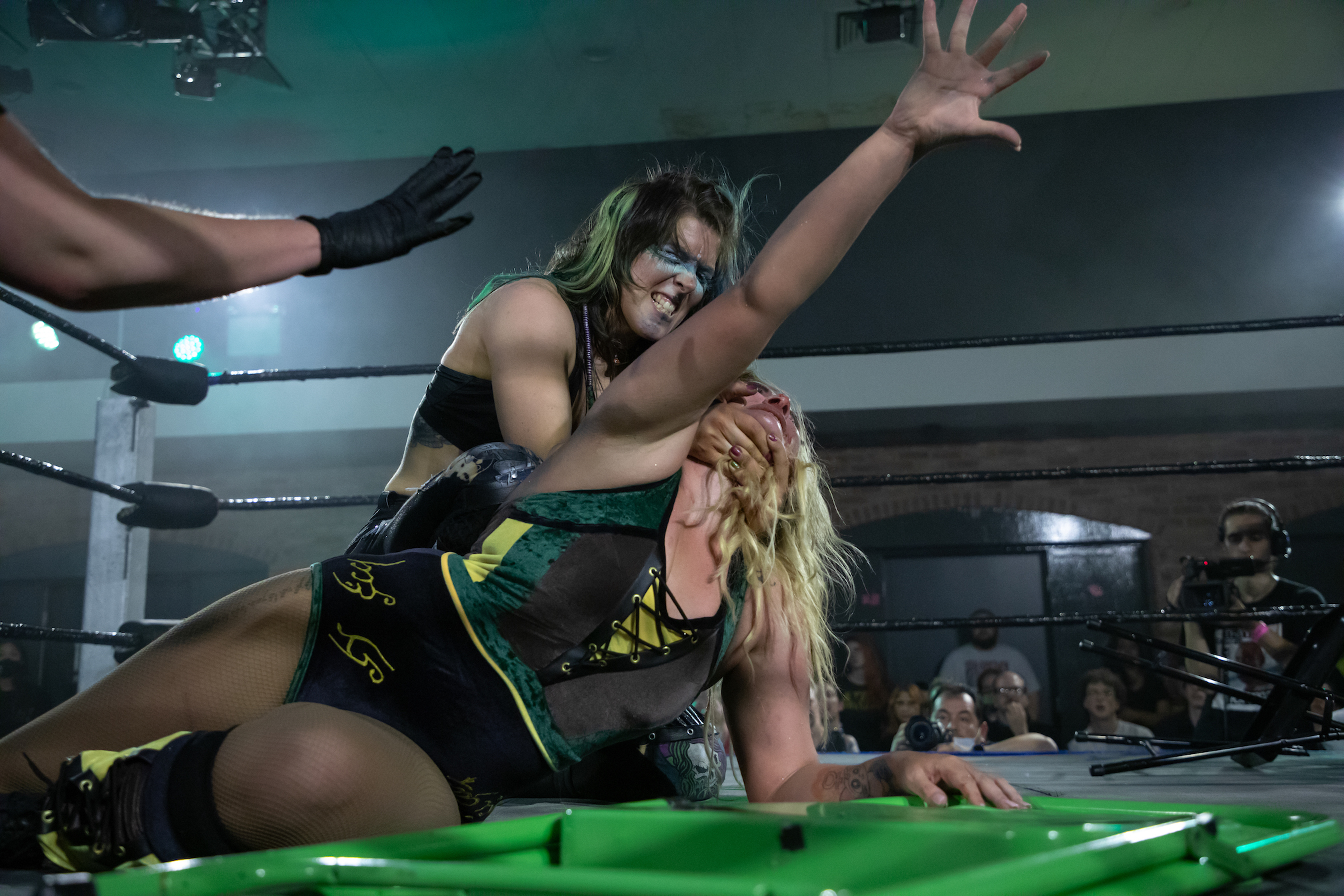
“The Mother Of Chaos,” in full facepaint and at peak power, wears down Emersyn Jayne in the final round of a brutal gauntlet match. (PHOTO BY DALE BRODIE CREATIVE/EVE)

“They really get you involved in everything they do,” she said. “And the evolution of this KASEY character really started there. They treat every single woman as top-tier. No matter who you are in the ring with there, you are either teaching or learning. I feel like some companies don’t know what to do with women, and what I love about EVE is that they understand exactly what to do. It’s quite sad that outside of Japan, there aren’t more promotions like EVE. But you are unfortunately going to get that where some promoters still just aren’t fans of women’s wrestling.”

Whether or not some promoters care for women’s wrestling, Owens continues to hone her craft and make believers out of doubters. The transition from her early years to her current guise, dropping her surname and being known as “The Mother Of Chaos” KASEY, is a testament to her constant self-evaluation and knack for reinvention.

“My trip to Japan really made me realize I love that style,” she said. “I incorporated some of that into who I am now. But it’s taken me a good 11 years to get to this point. And, with the facepaint and my matches now, maybe I’m channeling some of the anger and frustration I had growing up.

I was bullied throughout school, so now I’m going to be the one to put a full stop on that. The buck stops with me. That’s what ‘The Mother Of Chaos’ is.”

With so much already behind her—and a career seemingly on the cusp of even bigger things—it’s fair to ask what’s next. Owens was reflective for a moment before answering.

“When I was sitting in the Ice Ribbon Dojo in Japan, my Father sent me a quote that said ‘Remember this life is not a practice’ … so I’ve taken that and just kept going,” said Owens. “There was a time when I thought about packing it all in, but I just can’t let this go. It’s not happening. The future is wide open, and I have friends in the U.S.A., so I know I always have somewhere to stay. But we will see how things go. The prognosis is that my broken ankle will be healed by April. So, watch this space … the future is wide open.”


Social Media plug:
Twitter - @Kaseyowens5
Patreon - patreon.com/KaseyOwens
Posted on

Putting Wrestling Comics In A Headlock

Headlocked Comics logo

Putting Wrestling Comics In A Headlock—An Interview With Writer/Creator Michael Kingston

Via Headlocked Comics Twitter

LARGER-THAN-LIFE CHARACTERS? CHECK! A fantasy world where anything can happen? Check! Large men in spandex? Check and check! I could, of course, be talking about professional wrestling, but just as easily also be talking about certain genres of comic books. Quite frankly, these two worlds have so much in common that it’s amazing there hasn’t been more extensive overlap between the two.

Enter Michael Kingston, creator of Headlocked: the comic meshing these two worlds together so well that your favorite wrestling stars are lining up to get involved. With Headlocked and its spinoff series, Tales From The Road, Michael has collaborated with over 40 wrestlers who share his passion for telling stories through this unique art form. PWI recently caught up with Mike to discuss all things wrestling and comics.

PWI: Where did the idea for Headlocked come from?

MK: I was a wrestling fan since the very first Saturday Night’s Main Event. George “The Animal” Steele hooked me as I was flipping through the channels, and I had never seen anything like it. That was my entry point, and I’ve watched wrestling every day since. [Growing up] I loved wrestling, loved comics, and I’d buy all the wrestling comics but … I just felt that they weren’t written for wrestling fans. So, I always thought there would be a market for a book like Headlocked. I took my idea to comic book companies, and I got laughed out of every room I went into. Literally! One guy actually laughed in my face. So, I decided to make the book myself. I worked two jobs for a year to make enough money for my first print run. And then I took it on the road, selling it out of a backpack at wrestling shows. As I started going to bigger conventions, I would meet wrestlers who liked what I was doing, and they helped support it. From there, I hooked up with Jerry Lawler, who does the covers for my books, and it just sort of spiraled from there.

PWI: Do you think there are similarities between trying to make it in the wrestling business and trying to make it in the comic book business?

MK: There are so many similarities between both in terms of what they are as art forms and businesses. A lot of the support structure that surrounds wrestling and comic books comes from the fans. They’re both kind of dominated by a singular aesthetic. When you talk to people about wrestling, they tend to think of WWE. And, when they think of comics, it’s superheroes. Then, obviously, you have colorful characters, the battle between good and evil … the sort of joke is, comics are like 2-D wrestling, and that’s why I found it strange to meet so much resistance early on. But I think the themes of breaking into these businesses are there. The emotional rollercoaster I had breaking into the comic business is the same as an independent wrestler has breaking into wrestling. The physical part is different, is all. Hopefully, I don’t have to fall off a ladder to make a comic!

PWI: You have collaborated with a lot of wrestlers so far, and I think it’s clear this is what sets Headlocked apart from previous wrestling comics. How important was this element to the success of the series?

MK: It’s my favorite thing to do. And the stories we tell are entertaining, but they are also important to the talent. The story I did with The Hurricane for Volume 1 of Tales From The Road, [at the time] he was sitting in a doctor’s office waiting for an MRI on his neck, not knowing if his career was over. So, the story we ended up telling was very powerful, and it’s even more powerful when you understand the circumstances behind it. If you give people something they’re excited to work with, you can tell the difference. Everything we make is made with love and passion, and I want people to experience that.

PWI: Wrestlers are obviously creative people, but this is a different way for them to tell stories. What’s the creative process like for you putting a story together with them?

MK: It’s different for everybody. Mick Foley wrote me a prose story. The Iinspiration and I had a Zoom call, and we talked out the story and had an email chain providing input. But, once we get a concept and the story beats, I’ll write it and send it to the talent. And we’ll work on it until we have something we’re happy with. But it takes on many different forms.

PWI: Has anyone surprised you with their creativity?

MK: I keep talking about The Iinspiration story just because it’s fresh in my mind. But we had it a certain way, and they suggested a different type of character for the “Heavy” in the story. My initial thought was that it was never going to work, but then it did work, and it actually changed the story into something else entirely. There’s always that moment where everything clicks, and I never in a million years would have pushed it in that direction. But their suggestion was what made that story what it was. Wrestlers are all storytellers. It’s who they are at their core. The ones that really do surprise me are the artists. Obviously, Jerry Lawler does the covers, but we’ve had Fred Ottman, Sinn Bodhi, Ken Anderson. Tony Atlas did a piece of art for us. He does pointillism, which, to me, is amazing to imagine this giant dude hunched over a desk. It’s cool to me because Headlocked has always been about showcasing wrestling as an artform. So, to showcase wrestlers who are artists is the coolest thing to me.

PWI: Any dream collaborations?

MK: Xavier Woods, Paul Heyman, Carmella … I think Carmella is fascinating, creatively, because she makes every gimmick work but never loses sight of who she is. And that’s a real gift that she doesn’t get enough credit for. Zelina Vega … there’s so many. I always say that wherever there is a ring and a payday, there’s a story. I’d love to get to a point where we are big enough to tell stories from less well-known people, because some of the most famous people may not have as many interesting stories that people on the fringes might have to tell. The Boogeyman! I think he’s fascinating. He’s such a unique personality, and I’d love to collaborate with him.

PWI: What does the future hold for Headlocked?

MK: I’ve got Volume 5 of the main Headlocked series in production, and it’s the wildest one yet. I can’t wait for people to read it. Not one person is going to imagine [that it goes the way] it goes. We will still be putting out our Tales From The Road series. And, by June, I’ll have enough content for Volume 4. We are currently only on Volume 2, so we have a lot of stuff still to put out. I’m hoping to do more stuff with Brian Myers and Matt Cardona in the Fig Story vein. I have a million ideas for that. And, in the first volume of Tales From The Road, I collaborated with Gangrel on a story about a guy who trains Bigfoot to wrestle. We’d like to spin that out into a series. I don’t ever see a scenario where I will run out of things to write. So, as long as people keep supporting us, we’ll keep making stuff.

Follow Headlocked Comics on Twitter

Posted on

What, Exactly, Is Brian Johnson Doing?

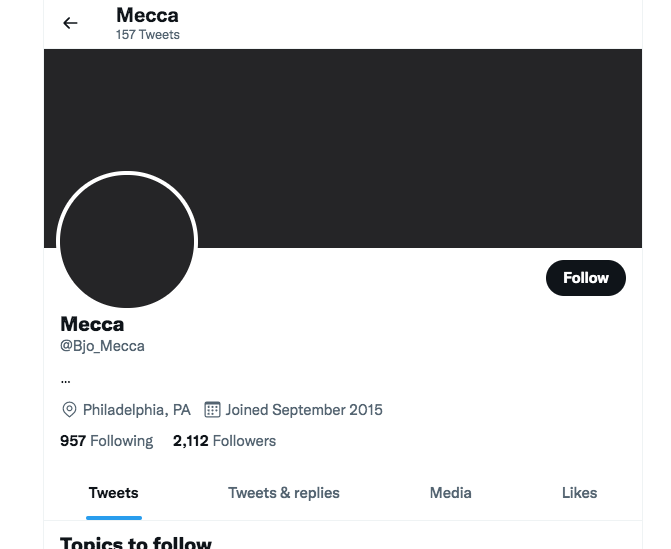
Screenshot of Brian Johnson's empty Twitter profile

What, Exactly, Is Brian Johnson Planning? 

“I have no idea where this will lead us, but I have a definite feeling it will be a place both wonderful and strange.” – Dale Cooper, Twin Peaks

 I KNOW BRIAN Johnson.

 This isn’t Brian Johnson.

If you’ve ever bought a ticket to a show that he was on or ever watched him on television, then you, too, know Brian Johnson … and you know that this isn’t Brian Johnson.

Say what you will about him—and lord knows that many have—but the one thing you could never say about him is that Brian Johnson is a man who has nothing to say. That’s why all of this is more than a little unsettling. And why I had to dig a little deeper into finding out the answer to the question that has been bugging me for several days now: “Why has Brian Johnson gone quiet?”

In the wake of last week’s news that Ring of Honor would be going on hiatus following the December 11 Final Battle PPV and releasing all contracted performers, an outpouring of love and support went out to those affected by the news. Many current ROH wrestlers took to social media to thank the promotion for giving them an opportunity, but to also discuss their future. While it was a sad occasion, there was also some hope. Surely Brian Johnson, perhaps ROH’s most outspoken performer would have much to say about this, right?

Wrong!

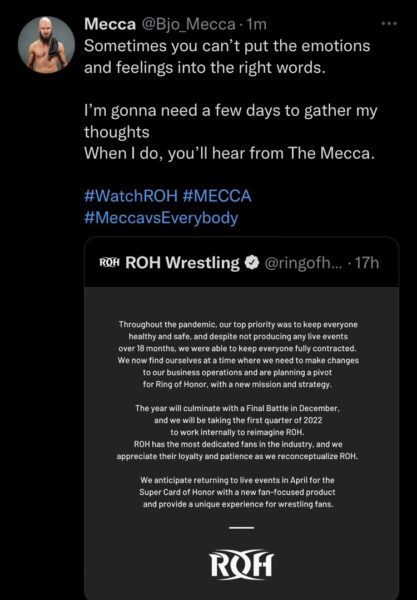
Instead of the usual vitriolic Johnson we have grown accustomed to, all we got was a retweet of ROH’s announcement regarding going on hiatus, coupled with a quote from the man himself that said:

“Sometimes you can’t put the emotions and the feelings into the right words. I’m going to need a few days to gather my thoughts. When I do, you’ll hear from The Mecca.”

A screenshot of Brian Johnson's now-deleted tweet

Sensing something unusual was afoot, I took the above screenshot.

It’s now been more than a few days, and we have yet to hear from The Mecca. What’s more, his entire social media has gone dark, and even the above tweet has been deleted along with all pictures and posts. Johnson’s Instagram account is still active, but a tad unusual.

So, just what the hell is going on?

In short, I don’t know. I have exhausted all methods of trying to get hold of Johnson personally and have had no response from the man. One of the benefits of working with Pro Wrestling Illustrated is that you can normally be put in contact with almost anyone in the wrestling business, but absolutely no one I have spoken to has heard from or seen Johnson, either.

It’s not that anyone is being coy or secretive—they simply just don’t know what’s going on with “The Mecca.” Every person, however, has echoed similar sentiments to PWI Editor-In-Chief Kevin McElvaney, who said, “This guy never shuts up, so this is very unusual behavior.”

Brian Johnson is a loudmouth and a trash-talker. He’s angry and he’s opinionated. But he is also incredibly talented and has the chance to do big things in professional wrestling. So, you can be sure that whenever he does emerge, whatever he does next will be fascinating to watch. Until then, we wait with bated breath and wonder just what “The Mecca” has planned.

Posted on

The Return of Alex Shelley

The Return of Alex Shelley

TO SAY THAT Alex Shelley has been everywhere and done almost everything in wrestling is an understatement. The Detroit, Michigan, native has plied his trade in Ring of Honor, IMPACT Wrestling, and New Japan to much success—and even cropped up in NXT for a brief time in early-2020. Away from the ring, he has worked just as hard in pursuit of academia and his day job. Now, after some time away, Shelley is on the cusp of a return to the ring as part of Major League Wrestling. PWI recently caught up with him to find out just what it is that keeps the former Motor City Machine Gun coming back for more.

PWI: A lot of fans are excited to hear that you are returning to wrestling again. Why is MLW the right place for that to happen?

Shelley: It’s the right place, right time. They contacted me about a year and a half ago, and it didn’t really work with my schedule because of my career outside of wrestling. But now, it does. On top of that, for me personally, I want to be creatively inspired. I want to be challenged. And I want to be excited about the wrestling I am going to produce. And when I saw the MLW roster, that appealed to me, as well.

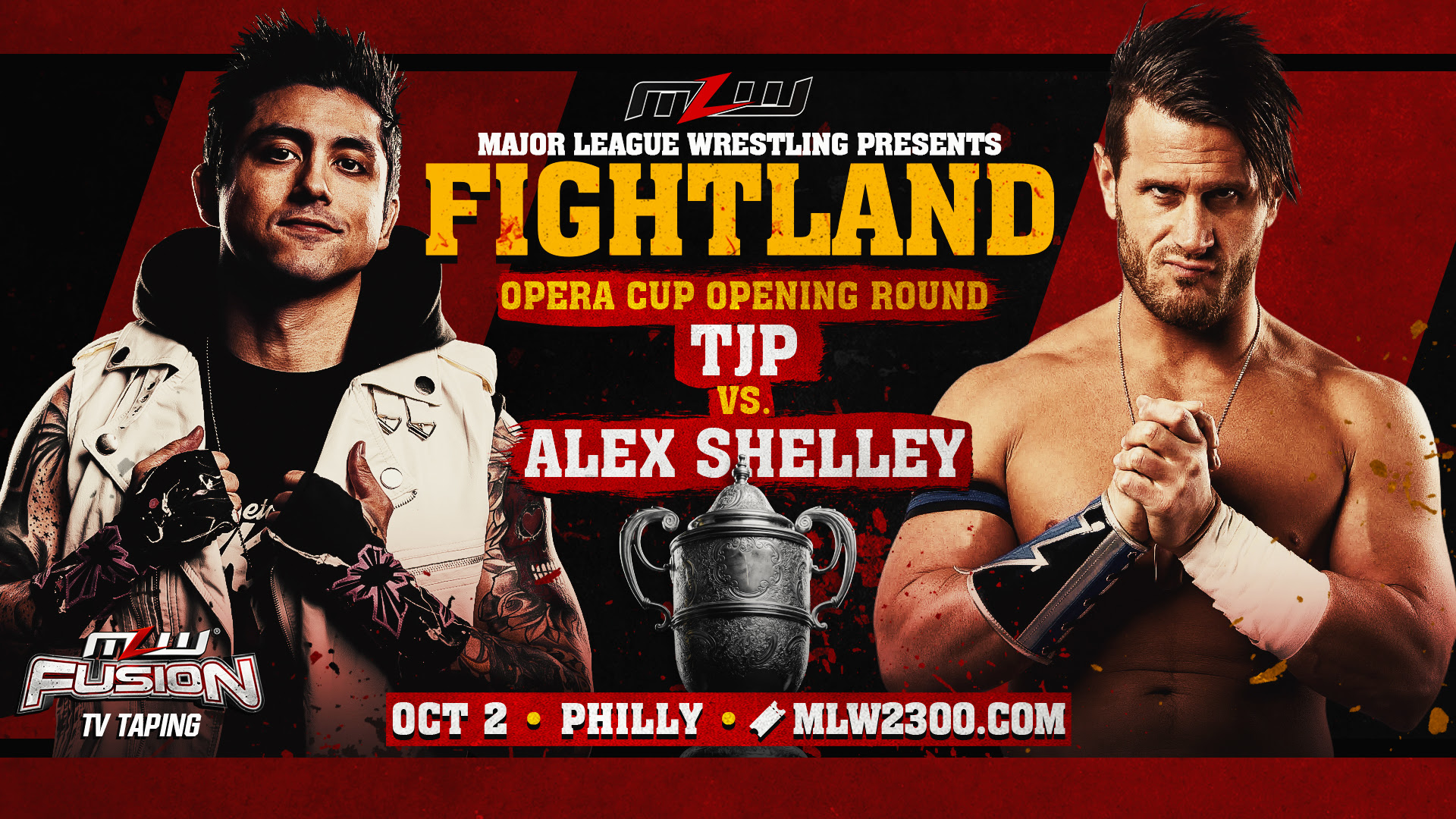
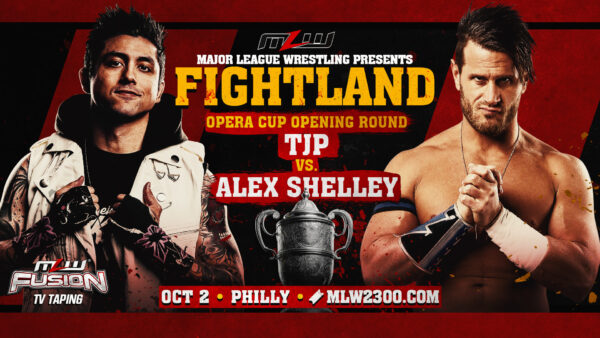
PWI: MLW has announced that you will face TJP at the Fightland event on October 2 as part of the Opera Cup tournament. TJ is someone you are quite familiar with. What can fans expect from that match?

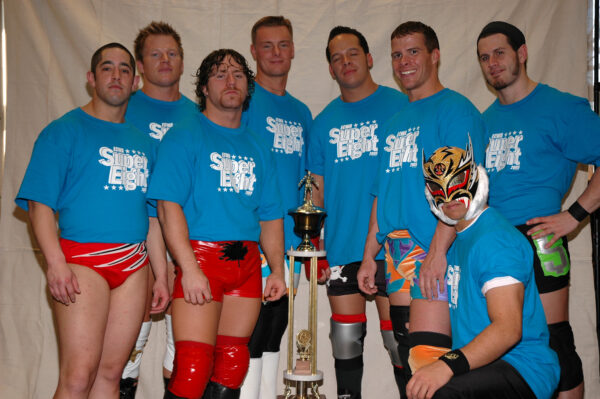
Shelley: I’ve known TJ since 2004. We both competed in the Jeff Peterson Cup in Florida when TJ was (wrestling as) Puma at the time. He was a guy who I had actually watched before I met him. I had watched CMLL and PWG, and he had been in both places. I thought he was very good. Then, I found out he was close to my age, too, When we first met at that Peterson Cup in Florida, Chris Hero and I had been sparring in the ring that day for close to an hour before the show started, just training. When we were done and got out of the ring, TJ came up to me and said “Where did you learn to do all that?”

A group photo of the 2005 Super 8 participants. On the right, Alex Shelley poses behind a crouching Puma (TJP), whom he’d first met the year prior. (Photo by Joe Zanolle)

Now, keep in mind, this was a peer of mine. He had more experience and better training than me—albeit different training. But that’s really where our bond was formed: over a love of wrestling, and technical wrestling in particular. And, if that doesn’t give you an idea of how this match will be, then I don’t know what will.

PWI: You touched on it earlier, but you do have a career outside of wrestling as a physical therapist. That obviously comes with its own responsibilities and was a key reason why you had to step away from IMPACT Wrestling earlier this year. A lot of wrestlers don’t plan for careers away from the ring. Is it something that’s been difficult for you to balance?

Shelley: I think it was different for me and for where I fell generationally. I’ve been doing this for 20 years, even though I’m still only in my late-30s. I remember very, very clearly around 2008, in TNA, due to the way the company was structured and how they operated at the time, I remember thinking that I don’t want to do this here forever. I don’t enjoy it. I love wrestling, love it so much, and I’ve given so much to it. But that environment just wasn’t good for younger wrestlers. That’s when I started making a contingency plan, and the obvious answer was to get an education. So, I got my first Bachelor’s degree in 2012. Then, I went to Japan for a little while, and Japan was an amazing experience.

But I fell in love with learning then. And, even though my first degree was in business, I got to thinking about physio. Everyone gets injuries, whether you’re a wrestler or not, right? New Japan had two trainers who went on the road with us, and I was around them for years. They helped the wrestlers get into the ring. Like, if you saw what goes on behind the scenes, with the amount of work that these guys put into the wrestlers, and what the wrestlers are then able to do after treatment, it’s very inspiring. And, at that point, I got very inspired to go in that direction.

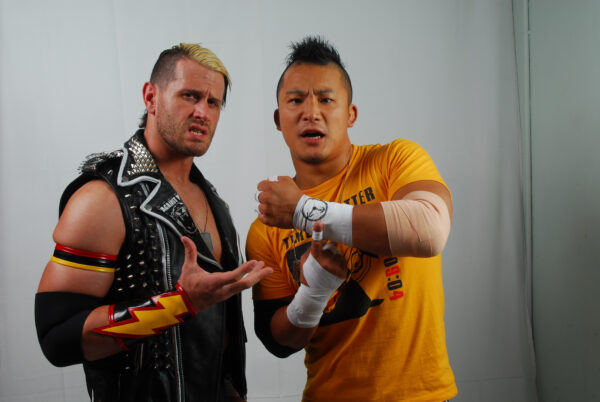
Alex Shelley and Kushida teamed up in New Japan to form the two-time junior heavyweight tag champions, Time Splitters. While in New Japan, Shelley was inspired to pursue physical therapy as a vocation away from the ring. (Photo ©2013 New Japan Pro-Wrestling, LTD.)

And I thought, Well I guess it’s time to get another four-year degree (laughs). So, I went back to school after my New Japan contract was up in 2015, and that was all she wrote. But I was splitting my time between wrestling and school, and it was so exhausting. I was in Ring of Honor at the time. I gave them all I had, but wrestling requires a certain amount of mental study outside of the ring. I wasn’t able to do that as much as I would’ve liked. Because I couldn’t. I had to learn all sorts of stuff about joints and anatomy and systemic illnesses and oh, my gosh! That was easily the most stressful period of my life. But I got through it, and now I’ve got a degree in Physical Therapy. Now, I’m able to work in physio 40 hours per week and wrestle, too. And I’m not saying it’s easy—because it’s not—but it’s a grind that I love because I love both fields.

PWI: You have been everywhere and done everything in wrestling. And you have a Monday-to-Friday job away from the ring. So, what keeps you wrestling? Is it that desire to be creatively inspired, like you talked about earlier?

Shelley: Yes it is. It’s very much a love of creativity. But also, wrestling is supposed to be fun. Wrestling is a sport, and what do you do with sports? You play sports! And I was that kid that grew up playing sports. I loved it because I loved helping people, and I loved pushing myself, and loved just being in the moment and feeling that stress—not the bad stress, but the good stress, which is what you feel when you’re in the ring. You almost go into autopilot … And I think that’s the most fun. And to be paid to do that is such an honor, such a privilege. And to be able to use your body and to help other people, I mean, to anyone who has ever spent one minute watching me, thank you so much!

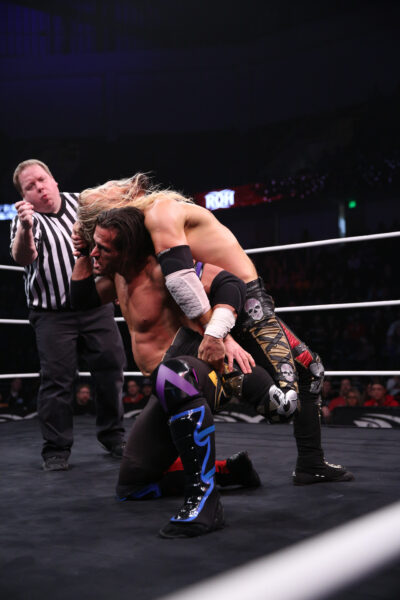
Alex Shelley attempts a submission on Mark Haskins at Ring of Honor’s Free Enterprise PPV in February 2020. Though Shelley is well known for his high-flying abilities, he’s also a sound technical wrestler. (Photo by Ring of Honor/Zia Hiltey)

PWI: Away from wrestling and physical therapy, you’re a big music guy. You sing and play guitar, and are a big punk rock fan. What kind of stuff is Alex Shelley listening to these days?

Shelley: For the most part, I revolve around the same things. Like, the bands that I like are going to be making music until the day they die because that’s just what they do. But, lately, there’s been this whole West Coast indie punk rock scene that’s popped up in the last ten years, and there’s this band called Wavves … f’n awesome man! It’s basically one guy. But he put out a new album not that long ago, and I love it because I can learn to play it, too, you know? It’s all basic chord parts, but so well structured. When I look at Wavves or Together Pangea or Fidlar or Guided by Voices or Electric Six … bands that I’m a huge fan of, they don’t tend to veer too far off [the same chords], just the strumming pattern is different. But they make the most out of the least, and it’s just so cool.

PWI: It’s quite clear that being creative is a big thing for you. With wrestling, your education, music … it’s a fire that burns pretty bright within you. You’re obviously going to bring that with you to Major League Wrestling. What can fans expect from you in MLW?

Shelley: I don’t want to say anything finite because it’s going to change from opponent to opponent. I’m going to wrestle TJP differently than I’m going to wrestle Calvin Tankman or Matt Cross. But I can promise you this much: Whatever I’m doing, or whoever I’m in there with, I’m going to work my ass off!

(MLW Fightland takes place this Saturday, October 2 from the 2300 Arena in Philadelphia, PA)

Posted on

WHAT’S N(E)XT For WWE’s Beleaguered Third Brand?

Finn Balor vs. Kevin Owens in 2015
Finn Balor connects with a Pele kick on Kevin Owens at an NXT house show in 2015. Indie veterans such as these two men are no longer the priority for the black-and-yellow brand, per recent reports. (PHOTO BY STU SAKS)

A Brand New Era: WHAT’S N(E)XT FOR WWE ON TUESDAY NIGHTS?

WHEN VINCE McMAHON paid a visit to the Capitol Wrestling Center earlier this summer, there were those who met the news with curious contemplation … and others who met it with downright dread. Many believed that the Chairman’s presence in Orlando on a “scouting mission” meant that change was afoot for the yellow-and-black brand. And, in the coming weeks, that proved to be decidedly so. A rash of NXT talent was released not long after this, accompanied by rumors that McMahon and his inner circle (that includes John Laurinaitis, Bruce Prichard, and WWE President Nick Khan) had decided that it was time for NXT to change the way it was doing business.

In recent years, WWE’s third brand had become the place where hardcore fans could go to get their fix of a more streamlined WWE product—one that featured great action, fresh characters, and simple storytelling. So confident were WWE brass in the NXT product’s appeal that they decided to move the weekly NXT show from the WWE Network to the USA Network and go head to head with the debuting AEW Dynamite. The theory behind this was that the mix of the WWE name and the style of product that NXT offered would be enough to steer hardcore and casual fans away from AEW programming. This theory proved disastrously wrong.

Enough has already been written in PWI and elsewhere about the Wednesday night ratings war that it doesn’t need to be repeated here. But, simply put, WWE lost. It turned out that given the choice between an alternative WWE product or a totally alternative product from someone else, wrestling fans went with the new company. As a result, WWE quietly moved NXT to Tuesday nights and surrendered Wednesdays to the All Elite upstarts.

In the aftermath of this, WWE downplayed any real significance of the move—or, indeed, the ratings loss—but, for a man who gets angry when a sneeze gets the better of him, you can be sure that Vince McMahon did not take kindly to the defeat.

As the creative driving force behind NXT, Triple H had built the brand on delivering a product that paid homage to the past, but also very much looked towards the future. It could be said that without his direction, many of the top independent and international names who found their way to Orlando would not have had the chance to do so otherwise. As the summer of 2021 rolled around, however, the word coming out of Stamford was that those same indie and foreign talents who Triple H signed (and the creative direction that pushed them), would be forced to take the blame for NXT’s poor performance on Wednesday nights.

Fast forward to SummerSlam weekend and an interview conducted by Ariel Helwani for BT Sport. In the interview, Nick Khan confirmed that changes would indeed be coming to NXT, and would begin to appear within a matter of weeks. These changes, Khan explained, would pretty much amount to a full reboot of the brand, alongside a change in the types of wrestlers that NXT has typically been hiring. Out with the more traditional “Indie guys” and in with younger and taller talent who can be molded into the WWE archetype.

Two decades ago, WWE’s developmental system turned out two world-class wrestlers, practically from scratch, in Batista and Randy Orton. Going forward, the company wants to focus more on turning bigger, taller, and fitter individuals into superstars. (PHOTO BY GARY DINEEN)

So, what does all of this mean for NXT as we know it? In all truth, probably a massive shift. Much of NXT’s appeal has always been that it was different than its older siblings, Raw and Smackdown. To stray too far from this could prove to be a fatal decision.

Or it could be an inspired one that will freshen up a product that had grown a little stale. Takeover 36, held the night after SummerSlam, felt like a swan song for the brand in some ways. But only time will tell if it leads to bigger and better things. One thing you can be sure of, though: With roots now firmly planted in McMahon-land, change is coming. And we all wait to see what’s N(e)XT.

For more on the potential changes coming to NXT, check out the latest episode of The PWI Podcast with Al Castle and Brian R. Solomon.